A cool place, and what that does to wine
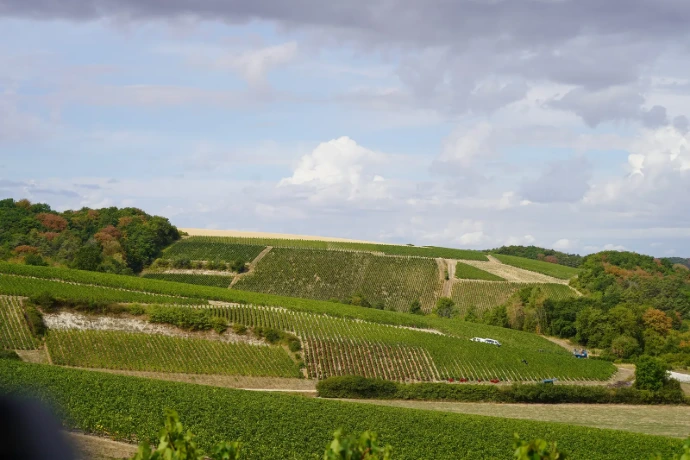
The vineyards sit at the northern edge of the Paris Basin, roughly 90 to 300 metres above sea level, in a cool continental climate with some oceanic influence. Grapes here ripen slowly and often only just enough. That sounds like a problem, and historically it was — but it is exactly what makes the wine work.
Grapes picked at modest ripeness keep high acidity and low sugar. As a still wine that would be thin and sharp. Put it through a second fermentation in a sealed bottle, leave it on its spent yeast for a few years, and that same austerity becomes the frame that carries the bubbles and the bready, nutty flavours that develop along the way. Champagne is a solution to a climate problem that turned out to be better than the problem it solved.
Underneath it all is chalk. The region sits on thick layers of chalk and limestone laid down on an ancient seabed. Chalk is porous: it holds water in dry spells and drains it in wet ones, which keeps vines steady through a growing season that rarely behaves.
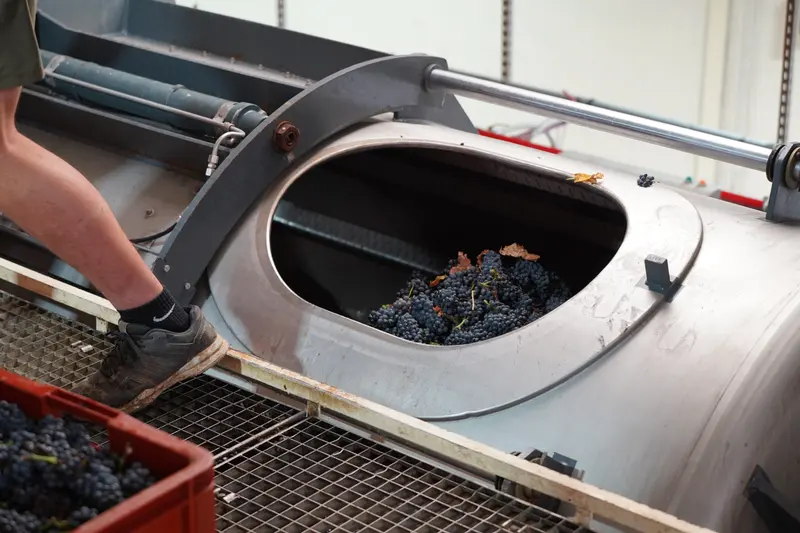
Harvest - whole bunches going straight into the press.
How the wine is made
The process is more regulated than almost any wine in the world, and every step is dictated by the same goal — preserving freshness.
Harvest. By hand, in whole bunches, into perforated crates. Dates and maximum yields are set each year by the region's governing body.
Pressing. Gentle and quick, so that black grapes give white juice with no colour picked up from the skins. Grapes go to one of roughly 1,900 pressing centres.
First fermentation. The juice becomes a sharp, low-alcohol still wine — the base wine.
Blending. Base wines from different plots, grapes and years are assembled into the final cuvée. This is where the house or grower's signature is made.
Second fermentation. Yeast and a little sugar go into the bottle, which is sealed. The CO₂ produced has nowhere to escape, and dissolves into the wine.
Ageing on the lees. The bottle rests on the spent yeast cells, which slowly break down and give the wine its brioche, biscuit and nutty character. This is autolysis, and time is the only way to get it.
Riddling and disgorging. The sediment is worked into the neck, frozen and ejected.
Dosage. A small amount of wine and sugar tops the bottle back up. How much determines whether it reads as bone-dry or off-dry.
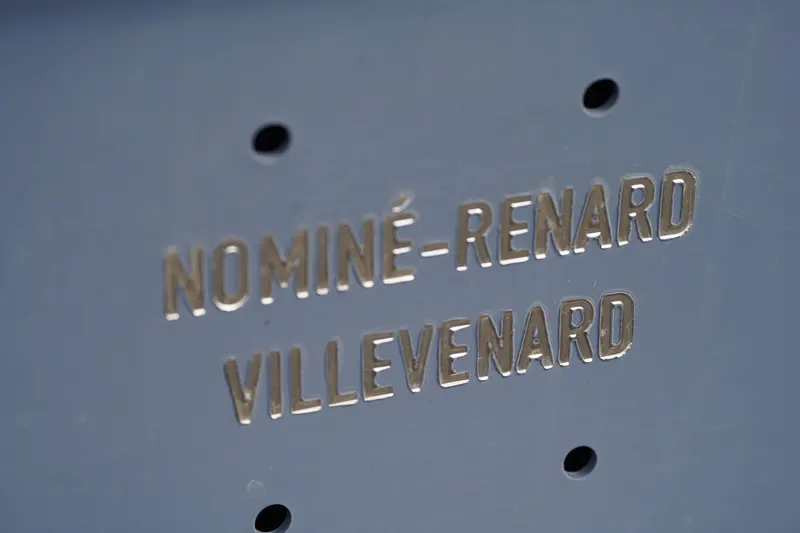
Nominé-Renard, Villevenard - The family name pressed into their own harvest crates
Why we only sell grower champagne
Most champagne is made by houses that buy their grapes. A récoltant-manipulant — a grower-producer — farms the vines and makes the wine from those same vines. That means one family's decisions run from pruning to disgorging, and the wine tastes of a specific set of parcels rather than a house style assembled from across the region.
You can check this on any bottle. Look for the small code near the base of the label: RM is a grower-producer, NM is a house that buys in fruit, CM is a co-operative. Every bottle we sell is RM.
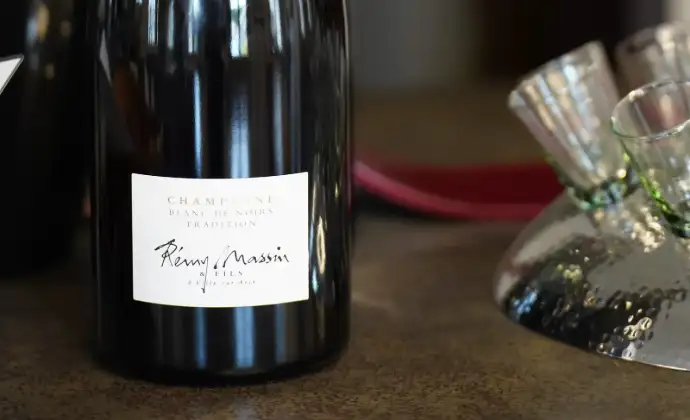
Styles of Champagne
Non-vintage, vintage, rosé, blanc de blancs, blanc de noirs, prestige cuvée and late release: what each term on the label actually promises, plus how to read dosage.
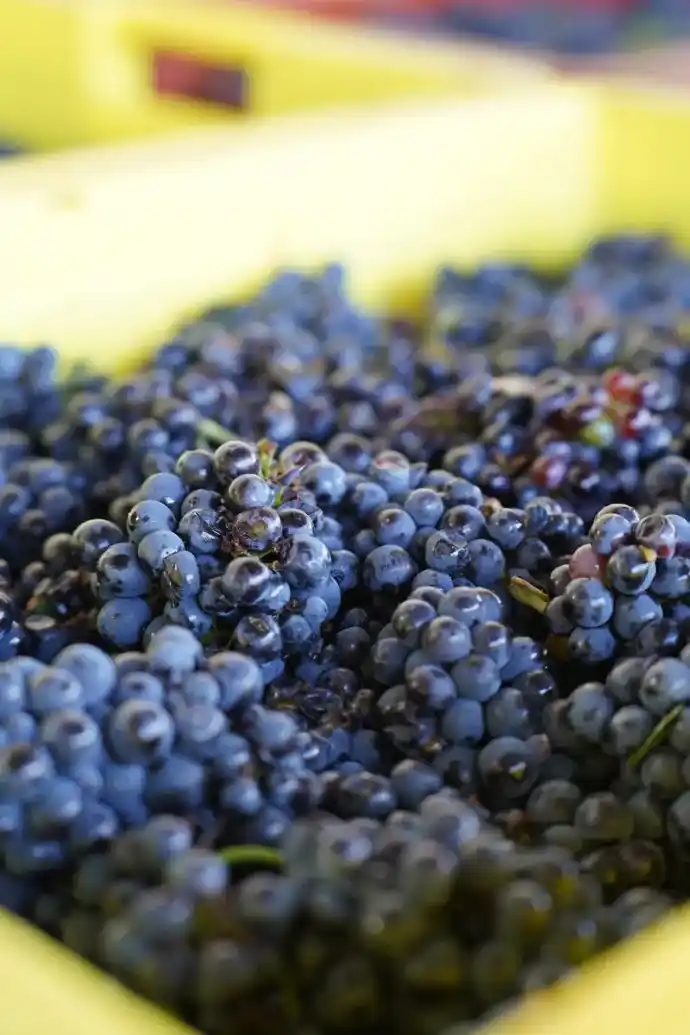
The Grapes
Pinot noir, meuniier and chardonnay make up over 99% of plantings. What each one contributes, the forgotten varieties still permitted, and how the vines are farmed
The Regions
Five subregions, each with its own soil, aspect and dominant grape. From the chalk of the Côte des blancs to the Kimmeridgian marl of the Côte des Bar.
Go deeper
Three things worth understanding before you buy