Chalk, and why it matters
Champagne sits on the northern edge of the Paris Basin, on thick sedimentary chalk laid down when the whole area was seabed. Below a shallow topsoil is chalky subsoil, and below that limestone and chalk bedrock.
Chalk is porous. It holds water through a dry summer and drains it away in a wet one, which gives vines a steadier supply than the weather alone would allow. It also reflects light and holds warmth — useful this far north — and the deep cellars cut into it hold a naturally constant temperature, which is why the region's bottles age where they do.
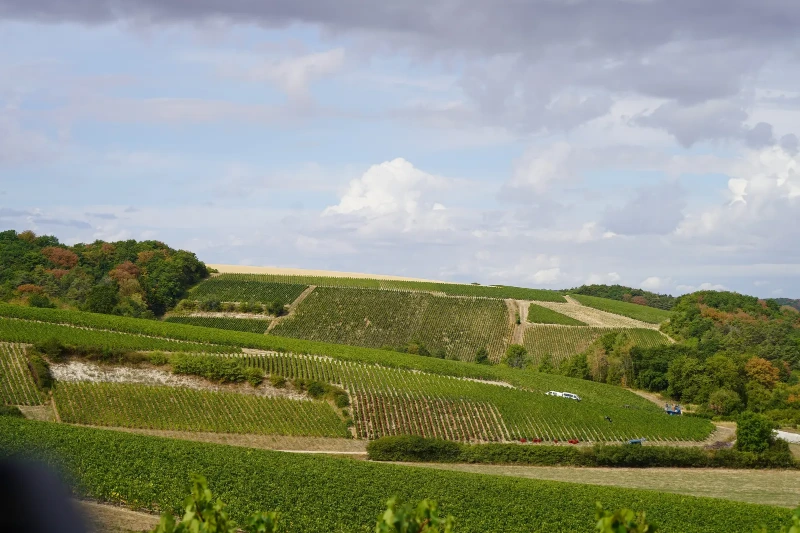
Chalk under the topsoil — porous enough to hold water in a dry summer and drain it in a wet one.
The climate
Cool and continental, with some oceanic influence from the west. Rainfall averages around 700 mm and is spread fairly evenly through the year, which is a mixed blessing: no drought, but plenty of moisture at moments when the vines would rather stay dry.
- Fungal pressure is a constant given the damp
- Rain during flowering or fruit set reduces the crop before it exists
- Rain at harvest swells and dilutes the grapes
A region that is warming
Champagne has changed measurably within one working generation. Comparing the early 1990s with the early 2020s, the direction is consistent — and it explains why still wines and zero-dosage bottlings, once near-impossible here, now work.
| Measure | Then (~1990s) | Now (~2020s) |
|---|---|---|
| Average temperature | Cooler | Warmer by about 1°C |
| Harvest date | Later | Around 18 days earlier |
| Average acidity | Higher | Dropped |
| Potential alcohol | Lower | Up by about 0.7% |
The five subregions
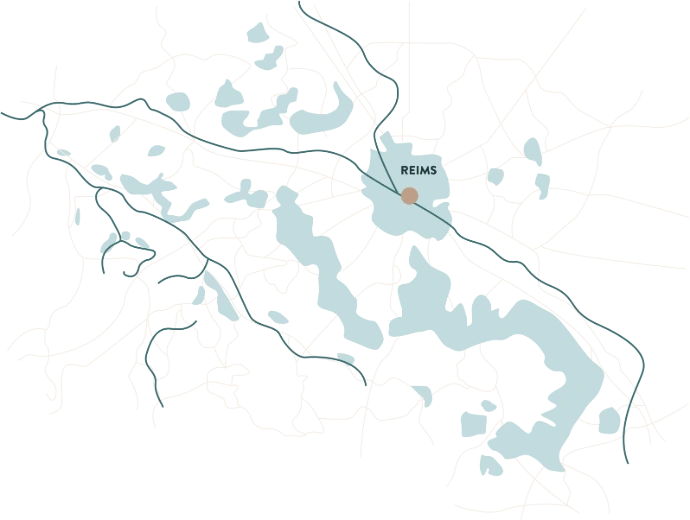
Montagne de Reims
A forested plateau ringed with vineyards, planted mostly to black grapes. Home to a concentration of grand cru villages and to some of the most structured pinot noir in the region.
- Predominantly pinot noir, on chalky soils
- Grand crus include Ambonnay, Bouzy, Verzy, Verzenay and Mailly
- Several top villages face north — cooler, later, and frost-prone
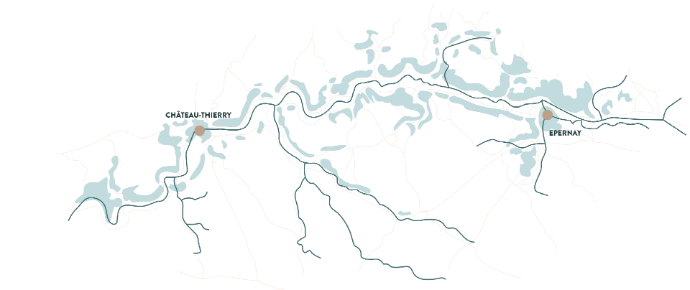
Vallée de la Marne
Following the river west, with heavier soils than the chalk elsewhere. Meunier country, and home to two of the four families whose wines we sell.
- Mostly meunier, on clay, marl and sandy soils
- Aÿ is the standout grand cru village
- Meunier buds late and ripens early — a real advantage in a frost pocket
- Fruit-forward wines, generous young
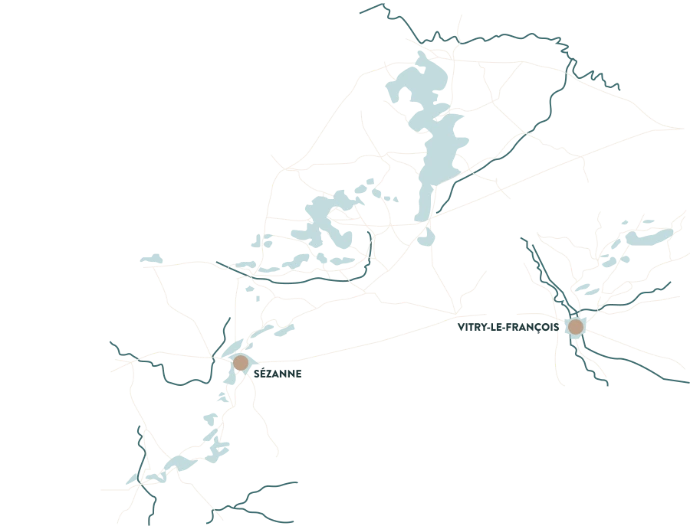
Côte des Blancs
A narrow east-facing escarpment of almost pure chalk, planted overwhelmingly to chardonnay. The reference point for blanc de blancs and for champagne that ages for decades.
- Chardonnay in over 95% of plantings
- East-facing chalk slopes catch the morning sun
- Grand crus include Cramant, Avize, Oger and Le Mesnil-sur-Oger
- Intensity and longevity above all
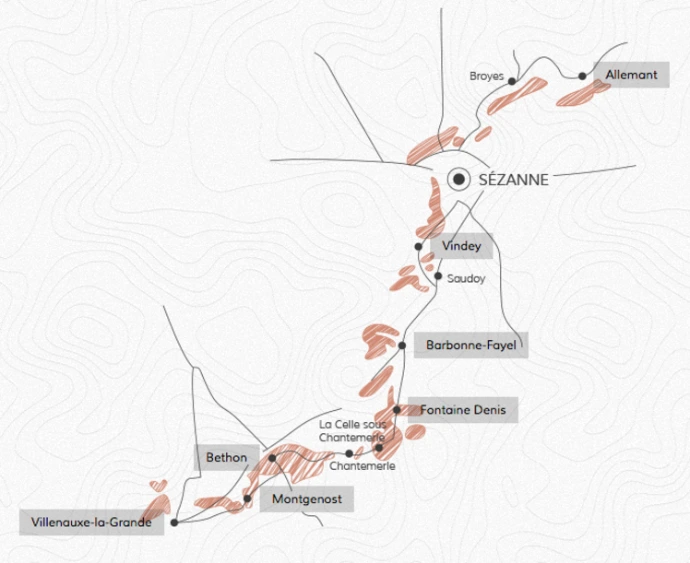
Côte de Sézanne
A southern continuation of the Côte des Blancs, also chardonnay-led but warmer and on heavier ground. The wines are riper and rounder, and generally ready sooner.
- Mostly chardonnay, riper and fruitier in style
- Clay and clay-silt soils, with pockets of chalk
- Softer and more immediate than the Côte des Blancs
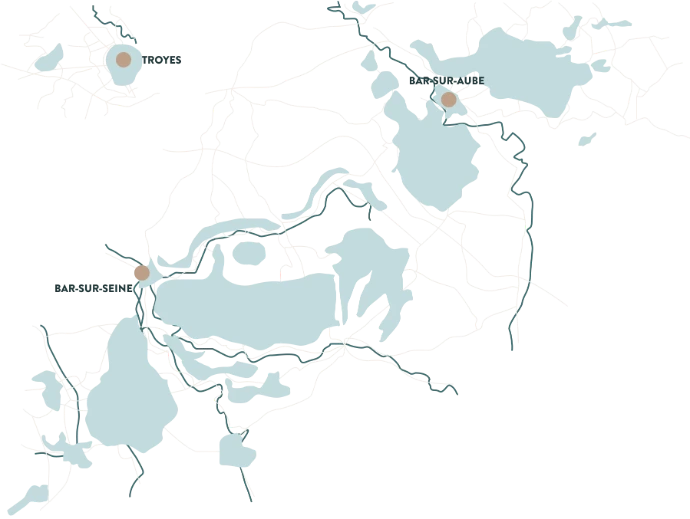
Côte des Bar
The southernmost district, closer to Chablis than to Reims — and geologically part of the same story. Around a quarter of all Champagne plantings, and long the region's most dynamic grower scene.
- About 25% of Champagne's vineyard area
- Pinot noir dominant
- Kimmeridgian calcareous marl, with excellent drainage
- Full-flavoured, ripe pinot noir
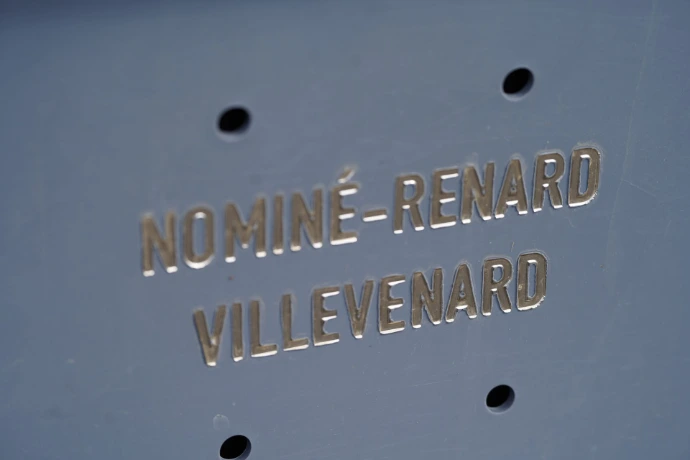
Coteaux du Petit Morin
Not a sixth region so much as a satellite of the Côte des Blancs: a handful of villages following the small Morin river south-west of the great chalk slope, just short of the Côte de Sézanne.
- Chardonnay-led, on chalk under a thin clay topsoil
- Villages include Villevenard, Coizard-Joches, Congy and Talus-Saint-Prix
- No grand or premier cru here — the ranking never reached this far
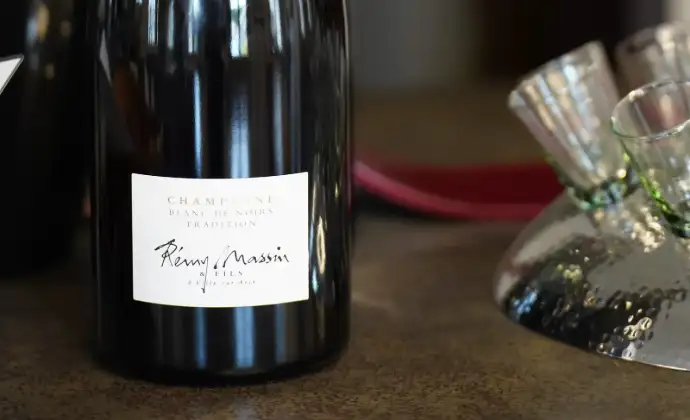
Styles of Champagne
Non-vintage, vintage, rosé, blanc de blancs, blanc de noirs, prestige cuvée and late release: what each term on the label actually promises, plus how to read dosage.
Go deeper
Three things worth understanding before you buy
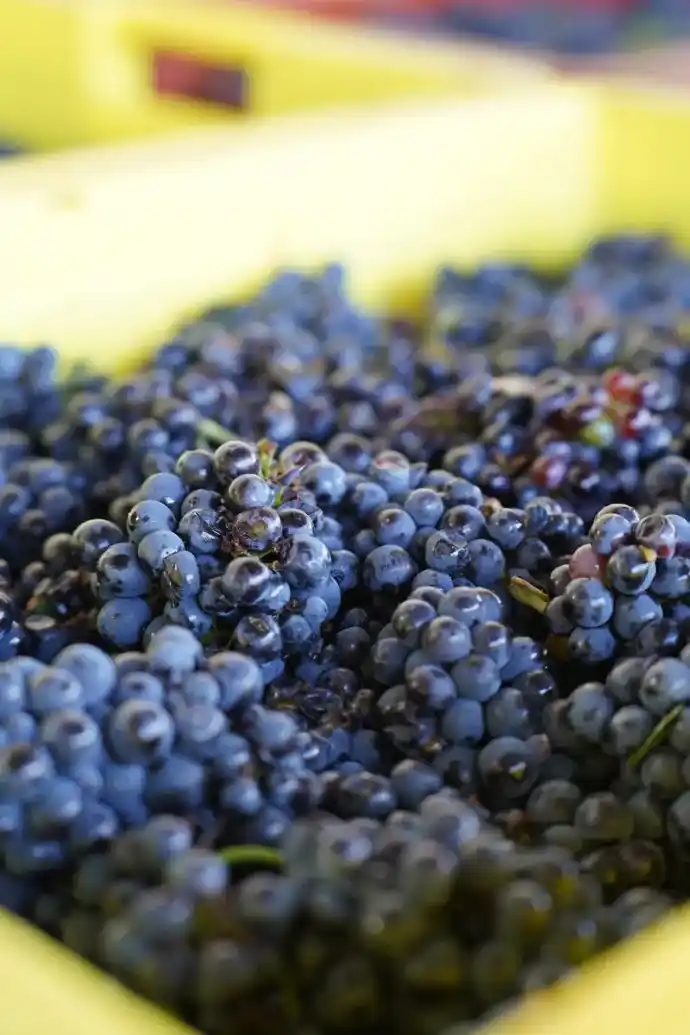
The Grapes
Pinot noir, meuniier and chardonnay make up over 99% of plantings. What each one contributes, the forgotten varieties still permitted, and how the vines are farmed